What’s The Difference Between Hoarding and Collecting?
Hoarding Disorder is one of the most stigmatised and misunderstood psychological problems brought to the attention of the general public with the help of popular reality TV show like, ‘Hoarders: Buried Alive.’
What is Hoarding Disorder?
Hoarding Disorder is a mental health condition characterised by excessive accumulation of unnecessary items. Hoarders have extreme difficulty with discarding or parting with personal possessions, regardless of their actual value. They have strong urges to save items which is responsible for their inability to part with items they’ve been storing. Extreme cluttering is typical of the home or workplace of the individual. Hoarders like to refer to themselves as collectors.
There are significant differences between hoarding and collecting. Below is an image of a typical hoarder’s home.
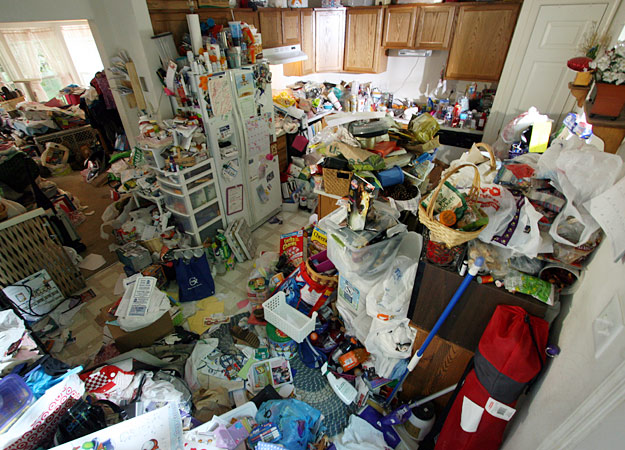
Image: By TheDoctorMo – Own work, CC BY-SA 3.0
Hoarding Vs. Collecting
Collectors – Have a passion for gathering things as a side interest like stamps, antiques, model cars and collectibles. Many things can be collected. It’s totally up to the individual what they choose to collect. Collections create communities of individuals who share similar passions and interests. Collectors will organise and display their items proudly showcasing them for others to see.
Hoarders – Lose their capacity to show these things in a sorted out way and end up obstructing on the ordinary use of living areas in their home. Instead of a living space, the home has turned into a storage facility. Part of the portrayal for habitual hoarder’s homes incorporates semi-blocked and blocked entryways. It is exceptionally hard to navigate through the spaces from one room to the next without stepping over the mess they’ve created. Hoarders have the extreme inability to discard worthless objects and usually live in squalor. Most hoarders prefer to be known as collectors rather than hoarders, although they have an intense emotional attachment to the items they own. Hoarders frequently become isolated in their own homes and suffer from depression and anxiety. Studies conducted in Australia show that 46/% of people with hoarding disorder share their homes with someone else. Hoarding Disorder can affect people of any age.
Percentage of age groups in Australia with Hoarding Disorder
- 5% were aged under 29
- 35% were aged 30 – 49
- 45% were aged 50 – 69
- 15% were aged 70 or older
The Consequences of Hoarding
- Social Isolation
- Family Breakdown
- Depression
- Shame
- Other Mental Health risks
- Physical Health and safety risks for hoarders, visitors and co-inhabitants
- Housing insecurity/risk of eviction from rented property/homelessness
- Face Tenancy Tribunal/Trader and Council or Consumer legal action
- Fire Hazard
- Loss of Quality of Life
- Child Protection Services can be called upon if children reside in squalor
- Inability to change without intervention
Compulsive hoarding was first thought by professionals to be related with Obsessive Compulsive Disorder or OCD. Now Hoarding Disorder has its own clinical definition in the DSM-5 – The Diagnostic and Statistical Manual of Mental health Disorders developed by the American Psychiatric Association.
Where do hoarders get their belongings from?
Compulsive buying
- Ebay and other online auctions and stores.
- Thrift Stores – second hand items.
- Retail – Seeking discounted goods
Acquisition of free things
- Advertising/Marketing/Flyers/catalogues
- Giveaways
- Pulling stuff out of Trash
- Stealing/Kleptomania/shoplifting
The Clean up
It usually takes a team of professional cleaners to work on bringing the home to a normal clean living standard. Cleaners dump excess rubbish (usually not easy for the hoarder to watch) and then proceed to sanitise the home before it becomes liveable & hygienic. They usually find animal faeces, off milk and rotting food, dead mice and have to deal with the stench before cleaning up and organising the incredible mess. To make the home liveable again.
Where to get help for Hoarding Disorder in Australia
- Counselling – Talk to a professional counsellor. Search for one nearest you: www.theaca.net.au
- Doctor – If you need help, talking to your doctor is a good place to start.
- Lifeline – Do you find yourself find in a Crisis? Call 13 11 14 or chat online (FREE SERVICE- available 24/7)
- Beyondblue – Do you have feelings of depression or anxiety? Call 1300 22 4636 or chat online
Sources
Catholic Hoarding Squalor Conference 2014: http://hoardingsqualorconference.com.au/2014/wp-content/uploads/2014/03/HS-Conference-Report-2014.pdf
Anxiety and Depression Association of America http://www.adaa.org/sites/default/files/Steketee_Master-Clinician.pdf
Hoarding image credit: Mutantsupermodel.com
Post read and approved by:
Sandra Ciminelli
Cred. Dip.Couns.(Christian)
Related posts

Equipping Christian Care
Who Is Carrying the Pain in Your Community? Why the Church Needs More Trained Listeners Most churches and Christian communities know that people are struggling. Increasingly, trained Christian counsellors are becoming essential to how responsibility for care is understood, shared, and sustained over time. Pain rarely announces itself publicly. It shows up in the quiet…

Why Celebration Matters
Celebration: A Practice That Restores Soul, Body, Relationships, and Spirit As Christmas and the holiday season approach, celebration becomes more visible around us — lights glowing in windows, gatherings filling calendars, and moments of reflection marking the close of another year. Yet in the busyness, the deeper purpose of celebration is often overlooked. This leads…

Do You Want to Get Well – Part 2:
Entering the Deep, Life-Giving Restoration of God Christian healing is one of the most misunderstood words in the Christian vocabulary. For many people, healing sounds like “getting fixed,” “getting over it,” or “getting back to normal.” But the biblical and theological vision of healing is far more expansive, richer, and more deeply hopeful than anything…

Effective Communication For Conflict Resolution
Communication skills can be used for building up relationships rather than tearing them down with our; anger, words and actions. Effective communication requires; respect, grace, empathy, active listening for adding value to the person being heard. The list below has a few dos and don’ts of effective communication for conflict resolution. WAIT FOR THE RIGHT…